Last updated: October 2026
Some of the most moving films ever made started as someone writing down what happened to them. If you've written a memoir or a biography, you've probably wondered whether it could work on screen. It can. True stories are adapted all the time, and audiences love them.
They do bring a few challenges that novels don't. Real life rarely fits a two-hour shape, and real people have feelings, and sometimes lawyers. This guide covers what you need to think about, from finding the film inside a life to the people who appear in it.
Why true stories work so well on screen
There's something about "based on a true story" that makes an audience lean in. Cheryl Strayed's memoir Wild, about walking more than a thousand miles alone after her mother's death, became a film starring Reese Witherspoon. Saroo Brierley's A Long Way Home, the story of a lost boy finding his family again 25 years later, became Lion. Martin Sixsmith's book about Philomena Lee's search for her son became Philomena, with Judi Dench.
Television loves them too. Adam Kay's diaries of life as a junior doctor, This Is Going to Hurt, became a BBC series.
None of these books were written as films. What they had was a clear emotional core, and a story worth telling.
Finding the film inside a life
This is the big one. A memoir can follow you from childhood to retirement. A film usually can't. So the first job is to find the spine of the story: the one stretch of time, relationship or struggle that everything else hangs from.
It helps to ask what your book is really about. Not what happens, but what it's about. Grief, maybe, or escape, or a father and son who never quite understood each other. Once you know that, it gets much easier to see which chapters carry the story and which ones, however much they matter to you, belong to a different film.
That last part can be hard. You lived these moments, and cutting them can feel like cutting part of yourself. It's worth remembering that the book still exists. The film just has to tell one story well.
Squeezing years into two hours
Screenwriters have a few tried and tested ways to fit a long life into a short film.
- Focus on one period, and let the rest come through in a few well-chosen flashbacks.
- Combine several real people into one character. A film can't introduce twelve colleagues, but one or two can stand in for all of them.
- Merge events, so that three similar arguments become one scene that does the work of all three.
- Use a frame, like an older you looking back, a journey, or a single day, to hold the story together.
Voiceover is tempting with memoirs, because so much of the book is your inner voice. It can work beautifully, but a little goes a long way. Most of the time it's better to show what you felt through what you did.
Film or TV series?
If your story really does need years to unfold, it may be a series rather than a film. A limited series can follow a life across decades in a way a film can't, and gives the people around you room to become real characters. This Is Going to Hurt worked as television partly because it's built from many moments rather than one big event.
If there's one defining stretch of time at the heart of your book, a film is probably the better fit. If you're not sure, that's one of the first things we'd talk through with you. You can read more on our TV adaptation page.
Writing about real people
This is the part people worry about most, so it's worth being clear about.
Your memoir is yours. You own the copyright in your book, and you're free to have it adapted. Things get more delicate when the film shows other real people, especially living ones who might not like how they come across.
In the UK there's no single "life rights" law of the kind you sometimes read about in American film deals. But the law on defamation and privacy still applies to a film just as it does to a book. A few things help:
- Change names and identifying details where a person isn't central to the story.
- Use composite characters, which protect people as well as saving screen time.
- Stay close to what you can stand behind, especially where someone is shown in a bad light.
- If key people are still alive and closely involved, consider asking for their blessing early. It's often easier than you'd expect.
If a producer becomes interested, they'll usually want to know who appears in the story and whether anyone has given permission, because it affects whether the film can be insured. At that stage it's well worth speaking to a solicitor who knows publishing or entertainment law. You don't need one to have your book adapted into a script.
What if it's a biography of someone else?
If you've written about another person's life, the same principles apply, with one more question: how much of your book depends on their cooperation, or on material that belongs to someone else, like letters, interviews or photographs? A script built on published facts and your own research is on firmer ground than one built on private material you'd need permission to use.
How we can help
We've worked with authors bringing us all kinds of stories, including memoirs and biographies, and we know these books need a careful touch. We're a small team. You'll talk to real people who've read your book, and you're welcome to visit us in Portsmouth.
A full film adaptation of a manuscript of up to 80,000 words costs £1,200 + VAT, and a first draft is usually ready within two weeks. TV adaptations, a pilot episode plus series bible, are quoted individually. If you'd like to know more about the whole route from book to screen, start with how to turn your book into a movie.
Common questions
Do I need permission to turn my own memoir into a film?
No. You own your book and can have it adapted. Permission only becomes a question for the other real people in it, and usually only once a producer is involved.
Do I need "life rights" in the UK?
There's no specific UK law requiring them. Defamation and privacy law still apply, though, and producers often ask for consent from key people before making a film. Take legal advice before signing any deal.
Is a memoir better as a film or a TV series?
It depends on its shape. One defining period suits a film. A story that unfolds over many years, with lots of people in it, often suits a series.
Will I have to change what really happened?
Some things, yes. Films compress time, combine people and merge events. The aim is to stay true to what the story means, even when the details move around.
See your story as a script, for free
Send us your manuscript and we'll turn a chapter or scene of your choice into a screenplay, free of charge. There's no catch and no obligation. It's simply a chance to see your story on the page, the way a producer would.
Written by
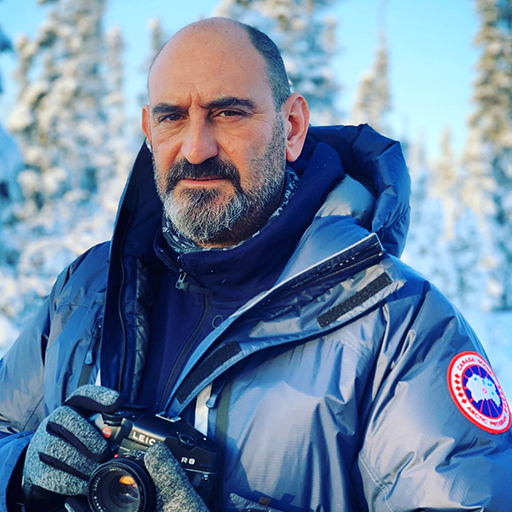
Dan Bernard
Dan is the founder of Tricorn Books, helping more than 200 independent and self-published authors bring their stories to life. With a background in publishing and screenwriting as well as creative design and photography, he brings first-hand experience to every adaptation project at Tricorn Books.
Related Articles
Free Sample Offer
Try us risk free
Submit your manuscript to us and we'll convert a selected chapter or scene into a screenplay, completely free of charge.
No catch or obligation, just a chance to see what we can do before you commit to a full adaptation.
Contact UsFree sample chapter conversion - no obligation
Claim Free Sample