Last updated: October 2026
"I think it would make a good movie." It's one of the things authors say to us most often, and usually a reader said it first. It's a fair question, and there's a better way to answer it than gut feeling.
Books that work on screen tend to share a few traits. Their stories move through action and dialogue rather than thoughts, their premise fits in a sentence, their main character wants something concrete, and their cast and timeline can be tightened to fit around two hours. If your story is bigger than that, with lots of characters, several storylines or many years, it might make an even better TV series.
Here are ten signs your book has real screen potential, a quick checklist to score it, and what to do next.
1. Your story unfolds through action and dialogue
Film is a visual medium. It shows rather than tells. If your book moves forward mostly through what characters do and say, you've already written with screen instincts. If it relies on long stretches of inner thought, reflection or description, adaptation is still possible, but those moments will need to become something we can see or hear.
A quick test: flick through a few chapters and count how often you write "she thought", "he realised" or "she remembered". The fewer, the easier the adaptation.
2. Your premise fits in one sentence
Producers need to sell a story fast, to financiers, broadcasters and eventually audiences. If you can sum up your book in one line that gives the main character, what they want and what stands in their way, you're thinking like a film-maker. The Martian, for example, boils down to "an astronaut stranded on Mars has to survive until he can be rescued."
Struggling to get it down to a sentence doesn't mean your book won't work on screen. It means the adaptation will need to find its central thread. Our guide to elevator pitches can help.
3. Your main character wants something concrete
Novels can be driven by inner change, but films need an external goal the audience can follow: escape, survive, solve the mystery, win them back, get home. The best adaptable books have characters whose inner growth happens through chasing that goal. Ask "what does my main character want?" If the answer starts with an active verb, that's a good sign.
4. Your cast is manageable
A film can only follow so many people. Most focus on a core group of perhaps five to eight characters. If your book has a clear lead and a handful of strong supporting characters, it will translate well. If it has a sprawling cast across several storylines, a film will mean merging and cutting characters. That might be a sign your book suits TV, where an ensemble has room to breathe.
5. Your settings are distinctive
Memorable places give directors something to work with: a crumbling estate, a wartime airfield, a research station at the edge of the world, a particular street in a particular decade. If your settings feel like characters in their own right, that's a real asset on screen. It's one reason historical fiction is so often adapted.
6. Your story has a clear shape
Most films follow a recognisable shape: a setup, an event that changes everything, rising complications, a turning point, and a climax. Your book doesn't need to follow a formula, but look for those big moments. Is there an inciting incident early on? A point of no return in the middle? An ending that pays off what came before?
7. Your dialogue does more than one job
Good screen dialogue reveals character, creates conflict and moves the story on, often all at once. Read a few of your conversations aloud. Do they sound like real people? Could you tell who's speaking without the tags? Would an actor want to say these lines? Strong dialogue often carries across to a script with little change.
8. Your timeline can be tightened
Films usually compress time. A story that unfolds over days or weeks suits film naturally. If your book spans years, ask whether the key drama happens in a shorter window. If it truly needs years, which is common with memoirs, biographies and family sagas, a TV series may suit it better than a film.
9. Your genre has a ready audience
Thrillers, crime, horror, romance, science fiction, fantasy, historical drama and true stories all have audiences that producers know how to reach. Literary fiction can absolutely be adapted too. Genre simply makes the commercial case easier to explain. Mixing genres is fine when it sharpens the story rather than blurring it.
10. Your theme comes through in what happens
Films explore big themes like love, loss, justice, survival and belonging through dramatic situations, not explanation. If your book's deeper meaning comes through the characters' choices and the events of the plot, it will carry onto the screen. When readers feel the point of your story without being told it, that's exactly what a film needs.
Score your book: a quick checklist
Give your book a score from 1 to 5 for each of these, where 5 is strongest. Be honest, or ask a well-read friend to score it with you.
- Visual scenes: can readers easily picture key moments?
- One-line premise: can you sum it up in a sentence?
- Clear goal: does your main character want something concrete?
- Cast: is there a clear lead and a manageable core cast?
- Settings: are your locations distinctive and filmable?
- Shape: are there clear turning points and a strong ending?
- Dialogue: would actors enjoy saying your lines?
- Timeline: can the drama be told in a tight window?
- Audience: is there a clear audience for this kind of story?
- Emotional impact: do readers come away feeling something?
As a rough guide, 35 to 50 suggests strong screen potential, 25 to 34 suggests real possibilities with some adaptation work, and below 25 means the story would need bigger changes to work on screen. If you scored low on cast and timeline but high elsewhere, think TV rather than film.
No checklist can promise a film deal. Budgets, timing and producers' tastes all play a part. But a strong score means your story has the bones of a good film or series.
What to do next
Producers do option books, but they judge screen potential by reading scripts and pitches, and an unsolicited novel is easy to put aside. The most useful next step is to see your book as a script. That's when you find out whether those scenes you can picture really work on the page.
We've written a full guide on how to turn your book into a movie, covering adaptation, pitching, options and rights. If you'd like professional help, our novel to screenplay service costs £1,200 + VAT for a manuscript of up to 80,000 words, with a first draft typically within two weeks.
Find out if your book would make a good film, for free
Send us your manuscript and we'll adapt a chapter or scene of your choice into a screenplay, free of charge and with no obligation. It's the quickest way to see your story the way a producer would.
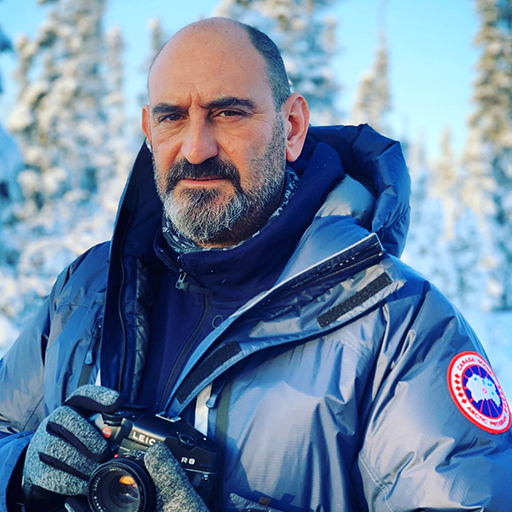
Written by
Dan Bernard
Dan is the founder of Tricorn Books, helping more than 200 independent and self-published authors bring their stories to life. With a background in publishing and screenwriting as well as creative design and photography, he brings first-hand experience to every adaptation project at Tricorn Books.
Related Articles
Free Sample Offer
Try us risk free
Submit your manuscript to us and we'll convert a selected chapter or scene into a screenplay, completely free of charge.
No catch or obligation, just a chance to see what we can do before you commit to a full adaptation.
Contact UsFree sample chapter conversion - no obligation
Claim Free Sample